↓
 

Cleveland Land Surveying

Local Land Surveyors in Cleveland, OH

Cleveland Land Surveying
  • Home
  • ALTA Survey
  • Boundary Surveying
  • Construction Survey
  • Drone LiDAR Mapping
  • Elevation Certificate
  • Land Surveying
  • Topographic Survey
  • Blog
  • Contact Us
Home 1 2 3 … 5 6 >>

Post navigation

← Older posts

Welcome to Cleveland Land Surveying

Cleveland Land Surveying Posted on August 18, 2017 by ClevelandSurveyorMarch 24, 2020

Your Final Stop for ALL of Your Survey Needs!                                         Contact us today for a free quote!

This site is intended to provide you with information on Land Surveying in the Cleveland, OH and Cuyahoga County area of Ohio. If you’re looking for a Cleveland Land Surveyor, you’ve come to the right place. If you’d rather talk to someone about your land surveying needs, please call our local number at (216) 208-7171 today. For more information, please continue to read.

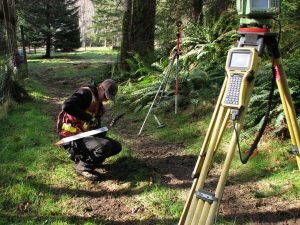
land surveyingLand Surveyors are professionals who make precise measurements to determine the size and boundaries of a piece of real estate.  While this is a simplistic definition, boundary surveying is one of the most common types of surveying related to home and land owners. If you fall into the following categories, please click on the appropriate link for more information on that subject:
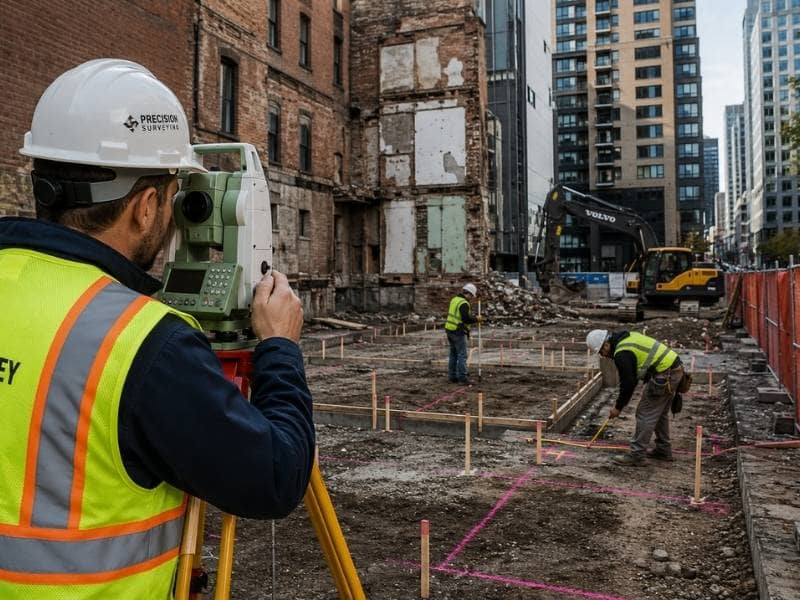
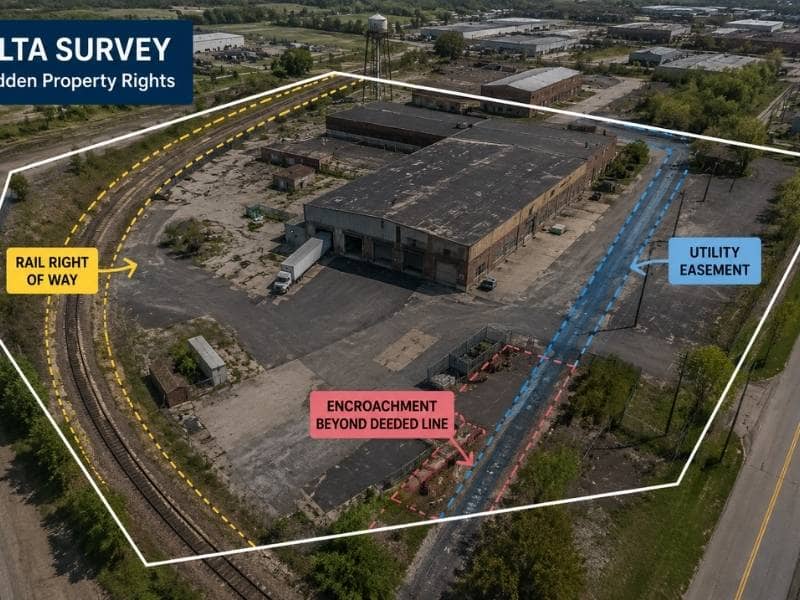

Cleveland Land Surveying services:

    1. I need to know where my property corners or property lines are. (Boundary Survey)
    2. I have a loan closing or re-finance coming up on my home in a subdivision. (Lot Survey)
    3. I need a map of my property with contour lines to show elevation differences for my architect or engineer. (Topo Survey)
    4. I’ve just been told I’m in a flood zone or I’ve been told I need an elevation certificate in order to obtain flood insurance or prove I don’t need it. (Flood Survey)
    5. I’m purchasing a lot/house in a recorded subdivision. (Lot Survey – See Boundary Survey if you’re not in a subdivision.)
    6. I’m purchasing a larger tract of land, acreage, that hasn’t been subdivided in the past. (Boundary Survey)

Contact Cleveland Land Surveying services TODAY at (216) 208-7171.

Posted in boundary surveying, elevation certificate, land surveying, land surveyor | Tagged boundary survey, Cleveland Land Surveying, land surveyor, land surveyor cleveland oh

How LiDAR Mapping Helps Identify Drainage Challenges Before Property Development

Cleveland Land Surveying Posted on June 17, 2026 by ClevelandSurveyorJune 16, 2026
Engineers reviewing site plans and terrain data to identify drainage challenges before property development.

Before any construction starts, a development team needs to understand the land. One of the biggest concerns on any site is water. Where does it go when it rains? Where does it collect? What paths does it follow across the ground? These questions matter a lot, and the answers are not always easy to find just by walking the property. That is where LiDAR mapping comes in. It gives developers, engineers, and surveyors a detailed picture of the land before a single shovel hits the ground.

How LiDAR Mapping Reveals Subtle Elevation Changes Across a Site

LiDAR stands for Light Detection and Ranging. It works by sending out laser pulses and measuring how long they take to bounce back. The result is a highly accurate map of the land’s surface, showing even tiny changes in elevation.

This level of detail matters more than most people think. A slope of just a few inches can change where water flows after a rainstorm. A small rise in the ground might send water toward a building instead of away from it. These kinds of changes are easy to miss during a regular site visit. The ground might look flat to the eye, but LiDAR data tells a different story.

LiDAR captures thousands of data points per square meter. That gives project teams a clear view of how the land actually sits. So when design work begins, the team already knows where elevation changes could cause drainage concerns. That early knowledge helps avoid costly surprises later in the project.

Identifying Natural Water Flow Paths Before Construction Begins

Every piece of land has natural paths that water follows when it rains. These paths form based on the shape of the ground. Water always moves from higher areas to lower ones, following the easiest route it can find.

LiDAR mapping makes these paths visible. By analyzing the elevation data, engineers can trace where runoff travels across a site. They can see which areas drain quickly and which ones tend to hold water. They can also spot natural channels, swales, and low-lying zones that act as collection points during heavy rain.

This information is very useful early in planning. For example, a natural drainage path might run through a planned building spot. The team can adjust the layout to avoid it. Shifting a floor plan during design is much easier than fixing a drainage problem after the building goes up. Furthermore, knowing water flow patterns helps the team design roads and parking lots so runoff moves safely away from structures.

Locating Hidden Depressions and Ponding Areas That Affect Development

Some of the trickiest drainage problems come from features that are hard to spot at ground level. Shallow depressions, uneven patches of land, and slight low spots can all collect water after rainfall. Over time, standing water in these areas can cause serious issues for a development.

LiDAR mapping picks up on these features with precision. Even a depression just a few centimeters deep shows up clearly in the data. During a site visit, these low spots might look like normal ground. After a heavy rain, though, they can turn into ponding areas that sit wet for days.

Finding these spots before design work begins gives the team a real advantage. They can plan grading work to redirect water away from problem areas. They can also decide early whether a site needs additional drainage infrastructure. Without LiDAR data, these hidden depressions often go unnoticed until construction starts. Sometimes they stay hidden until the project is done and standing water becomes a regular problem.

Using LiDAR Data to Support Stormwater Management Planning

Managing stormwater is one of the most important parts of land development. Local rules often require developers to show how their project will handle rainfall runoff. They must do this before getting approval to build. That means engineers need accurate terrain data to design the right systems.

LiDAR mapping provides that foundation. Engineers use LiDAR-generated terrain models to figure out where retention ponds, detention basins, and drainage pipes need to go. They can model how water will move across the finished site. That helps make sure runoff goes to the right places. Additionally, they can check whether existing drainage infrastructure nearby can handle the extra flow that a new development might bring.

Because LiDAR data is so precise, the stormwater plans that come from it tend to be more reliable. They reflect what is actually on the ground, not what a quick site visit suggested. As a result, engineers spend less time revising designs. Developers also spend less time waiting for approval.

Why Early Drainage Analysis Can Reduce Development Delays

Drainage problems found late in a project cause real delays. If a major water flow issue turns up after permits are submitted, the whole design may need to start over. That takes time, and time costs money. In some cases, unexpected drainage issues discovered during site work can stop construction entirely until the problem gets resolved.

Starting with LiDAR mapping helps avoid this situation. When the team knows about drainage challenges early, they can build those into the design from day one. The grading plan accounts for problem areas. The stormwater system gets designed with real data. The layout of the site reflects where water naturally wants to go.

In addition to saving time, early drainage analysis also helps avoid permit rejections. Many local agencies require detailed stormwater studies as part of the approval process. Plans based on accurate LiDAR data have a stronger foundation. They are less likely to get sent back for revisions.

Frequently Asked Questions

What is LiDAR mapping in land development? LiDAR mapping uses laser-based technology to collect highly accurate elevation and terrain data. The information helps surveyors, engineers, and developers evaluate site conditions before construction begins.

How does LiDAR mapping help identify drainage problems? LiDAR mapping creates detailed surface models that show elevation changes, drainage patterns, low areas, and water flow paths. Many of these features are not visible during a standard site inspection.

Can LiDAR detect areas where water may collect after rainfall? Yes. LiDAR data can identify depressions, low spots, and uneven terrain where water is more likely to collect, helping project teams assess drainage conditions early in the planning process.

Is LiDAR mapping useful for both commercial and residential developments? Yes. LiDAR mapping works for commercial, residential, industrial, and infrastructure projects because it provides accurate terrain data that supports planning and design decisions at any scale.

When should LiDAR mapping be performed during a development project? LiDAR mapping is most useful during the early planning stages, when developers and engineers are still evaluating site conditions and making decisions about layout, grading, and drainage strategies.

Posted in land surveying, LiDAR Mapping | Tagged land survey

How To Find Your Home On FEMA’s Flood Insurance Rate Maps

Cleveland Land Surveying Posted on July 28, 2017 by ClevelandSurveyorMarch 10, 2018

What are FEMA flood maps?

flood survey - elevation certificateFEMA’s Flood Insurance Rate Maps (FIRMs) or just Flood Maps are provided after a flood risk assessment has been completed or updated for a community.  This study is known as a Flood Insurance Study.  The FIRM gives you the Base Flood Elevations (BFEs) and insurance risk zones in addition to floodplain boundaries.  The FIRM may also show a delineation of the regulatory floodway.

Once the “insurance risk zone”  (commonly referred to as the flood zone) is determined, actuarial rates, based on these risk zones, are then applied for newly constructed, substantially approved, and substantially damaged buildings.  FEMA uses these rates to determine the insurance rate you will pay for flood insurance

FEMA’s Digital Flood Maps

FEMA discontinued the production and distribution of paper flood maps in 2009 as part of its Digital Vision Initiative. This affected all the Flood Maps, boundary information, and study reports. However, clients can still view the products for free through their website or buy them in digital format.

To view these flood maps online, go to FEMA’s Map Service Center and key in your address (hi-lited area shown here) search for your home.  This will prompt you to then select the map that covers your area.  The Flood Maps are somewhat cumbersome to use online. It is best to go through the tutorial on the bottom right of the address search page for an easier and more effective use of the GIS map.

Posted in construction, flood damage, land surveying, land surveyor | Tagged elevation certificate, FEMA flood map, flood zone, National Flood Insurance Program, NFIP

Post navigation

← Older posts
Get Quote Button
© Cleveland Land Surveying
Cleveland, Ohio
Phone: (216) 208-7171

Web Development and SEO by:
N2Biz.co


Privacy Policy | Terms of Use

The owner of this website, USA Surveying & Engineering, LLC., provides coordination of professional land surveying and engineering services in all 50 states. The professional surveying and engineering services provided to you will be conducted by fully licensed professionals in your state.

↑